What is GEO in AI search?
A plain-English guide to Generative Engine Optimization for ChatGPT, Claude, Gemini, Perplexity, Google AI Overviews and AI search visibility.
GEO helps AI systems understand what you are worth mentioning for.
Generative Engine Optimization is the work of making your brand, services, expertise, locations and proof easier for AI systems to understand and summarize.
It is not about tricking ChatGPT. It is about becoming a cleaner source: specific pages, consistent entities, strong topical coverage, honest comparisons and source-worthy explanations.
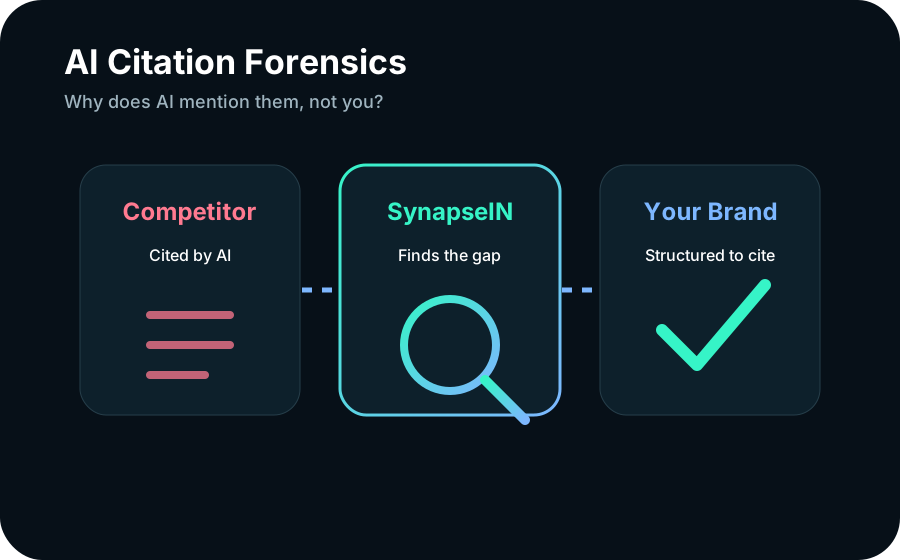
AI cannot cite what it cannot clearly understand.
Who you are
Brand, founder, services, niches, locations and proof must be consistent across the site.
What you know
Dedicated pages answer the questions a real buyer and an AI summary both need answered.
Why trust you
Clear claims, examples, transparent limits, schema markup, llms.txt and useful comparisons.
Quick answers
What does GEO stand for?
GEO stands for Generative Engine Optimization. It improves how clearly AI systems can understand, summarize and potentially cite a brand.
Which AI engines does GEO target?
GEO thinking applies to ChatGPT, Claude, Gemini, Perplexity, Google AI Overviews and other AI search or answer systems.
Can GEO guarantee AI citations?
No. AI citations cannot be guaranteed ethically. GEO improves clarity, usefulness and source-readiness so the brand has a stronger chance of being understood and referenced.
Short answer: What is GEO?
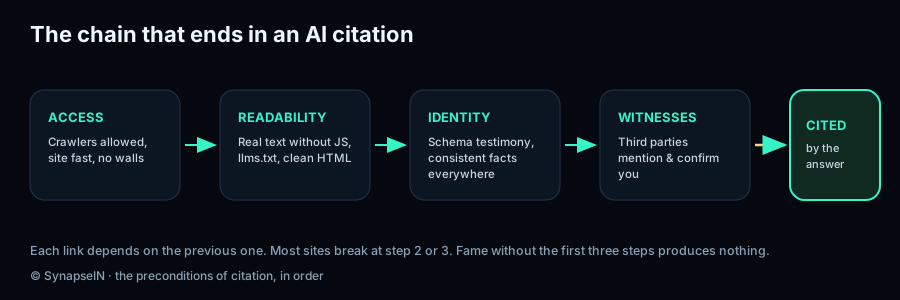
Why this matters for SEO, AEO and GEO
GEO uses entity clarity, schema, source-worthy pages, comparison content, citations, llms.txt and consistent language across the site.
Search is no longer only about matching keywords. A strong page must be technically accessible, easy to extract as an answer, and clear enough for AI systems to connect the brand with the right services, industries and buyer problems.
| Layer | What the page should prove | How SynapseIN handles it |
|---|---|---|
| SEO | The page is crawlable, relevant, internally linked and technically clean. | Titles, headings, schema, links, sitemap, canonical signals and content depth are reviewed. |
| AEO | The page answers common questions directly and clearly. | Short answer blocks, FAQs, lists, tables and question headings are added where useful. |
| GEO | The page explains the entity, service and proof in a way AI systems can parse. | Entity language, llms.txt, schema, source-worthy sections and citations are improved. |
Questions people usually ask
What should I do first?
Start with the free AI Search Readiness Audit so the most obvious technical, AEO and GEO gaps are visible before a human review.
Can SynapseIN guarantee rankings or AI citations?
No. SynapseIN does not guarantee rankings, leads or AI citations. The work improves clarity, usefulness, technical trust and citation readiness.
When should I contact the SynapseIN team?
Contact the team when the website affects serious revenue, trust or reputation and you want a practical implementation plan rather than generic advice.
Useful next steps
Run the free audit · Read the methodology · Request a human review