Updated: November 22, 2026 | Author: Manas Panda
Tier 3 & 4 China E-commerce 2026
Why smaller cities are outgrowing tier 1 in FMCG and online retail. Bain data and Pinduoduo growth.
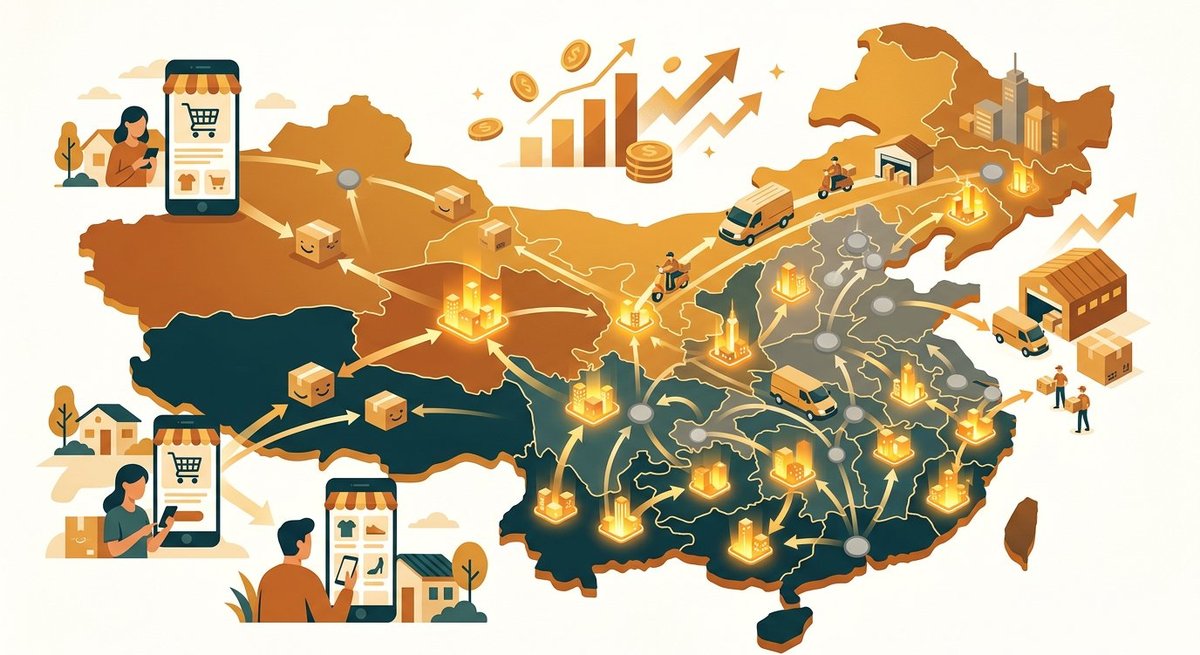
Everyone fights for Shanghai, Beijing and Guangzhou. Ad costs are highest there, competition is fiercest, and growth is slowest. Meanwhile, the real growth is happening in cities most foreign brands can't name — and on platforms built for them.
The field report in one table (Bain China Shopper Report):| City tier | FMCG volume Q3 2024 | Online growth |
|---|---|---|
| Tier 1 | -4.4% | Below average |
| Tier 3 | +2.9% | +4.4% |
| Tier 4 | +5.5% | +10.5% |
Market average online growth: +2.3%. Warehouse clubs: +59% in tier 3/4 vs +11% in tier 1/2. Household consumption in tier 3/4 grew 3–5% in 2024 while tier 1 retail declined.
Why lower-tier wins
Lower housing costs = more disposable income. Near-universal smartphone penetration. E-commerce brought product access and price transparency that coastal stores never had. Rural China alone has 314 million internet users (CNNIC), penetration 69.5%, and rural online retail grew from ¥353B (2015) to ¥2.56 trillion (2024). Rural consumption grows 6–7% YoY, outpacing urban 4–5%.
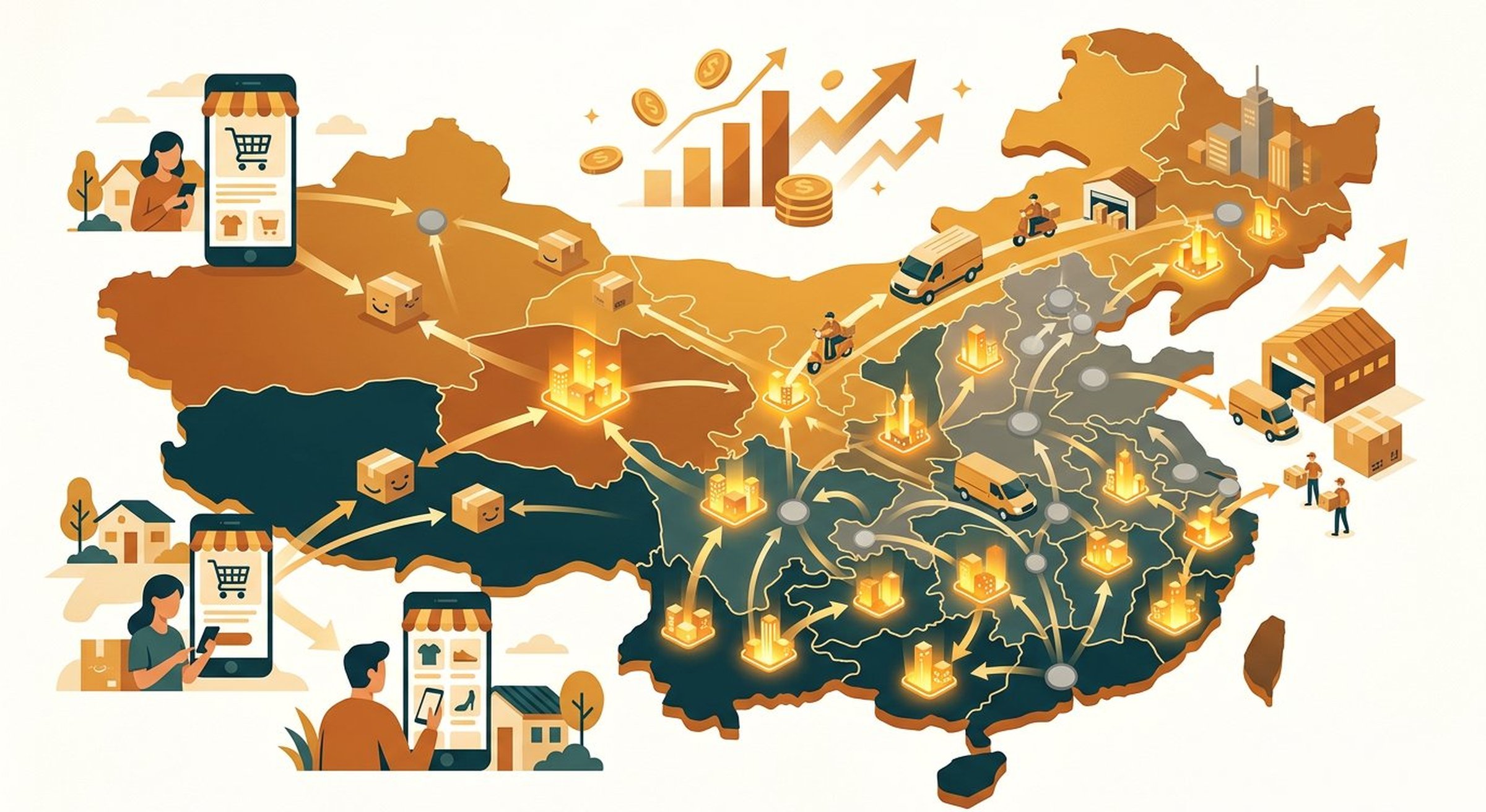
Kuaishou (797.3M MAU, 412.3M DAU, Q2 2026) is the lower-tier super-app: 60% of users tier 3 and below, 22.6% aged 51+, host-driven loyalty, lower CPM than Douyin, and average selling price up 16.27% in 2025. Pinduoduo owns group-buying and price-sensitive categories. More than 60% of new live-stream buyers now come from tier 3 and smaller cities.
What to do
Tier 2 for brand building, tier 3–4 for volume. Price for value, sell through Kuaishou/Pinduoduo, use host personality and repetition, not polished ads. Starbucks learned this after a 14% big-city sales drop in 2024 — it refocused expansion on tier 3 and 4.
Frequently asked questions
Are tier 3 and 4 cities growing faster than tier 1?
Yes. Bain found FMCG volume rose +2.9% in tier 3 and +5.5% in tier 4 while tier 1 fell 4.4%. Online growth in tier 4 was +10.5% vs +2.3% market average.