The most “real” global client communication I've had was with a client in China. He speaks Chinese. I speak English.
Our project team became: client + me + Google Translate + screenshots + the universal language of 👍. And honestly? It worked better than some projects where everyone speaks perfect English.

Moments that still make me laugh
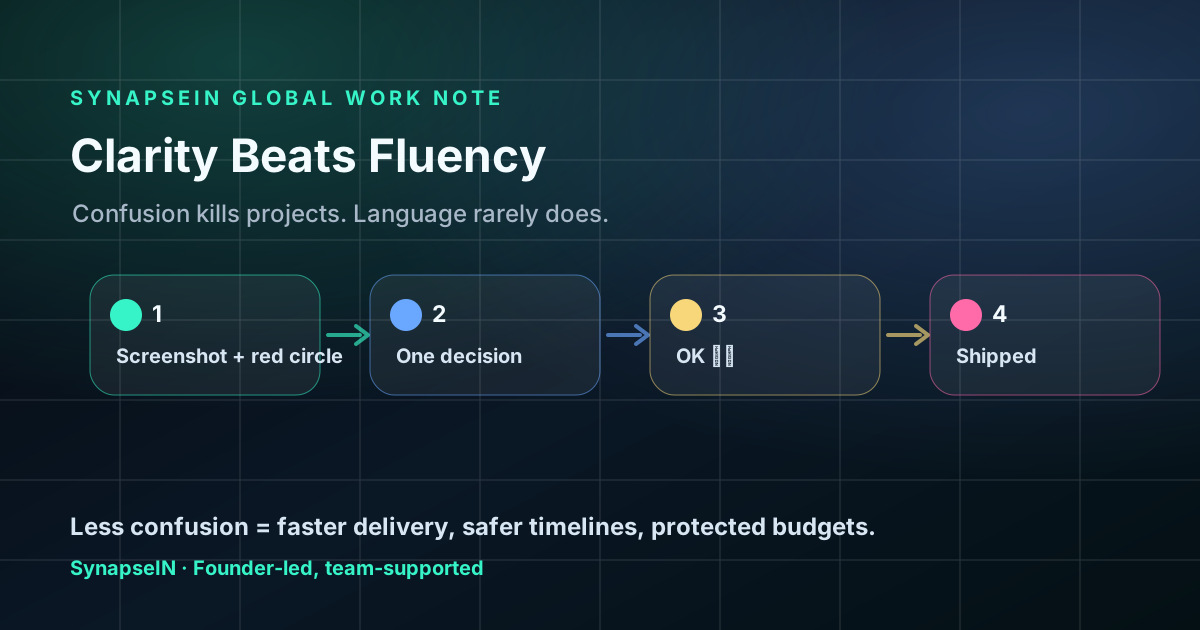
I'd send a careful, professional update about a website change. He'd reply with one screenshot, a red circle, and: "OK 👍"
I asked, "Does this meet the requirement?" He replied: "Yes 👍👍" — the fastest approval I've ever received. No meeting. No "let's align." Just two thumbs and peace.
Google Translate once turned a normal technical SEO note into poetry: "The page is now stable and will welcome the customer with happiness."
I didn't correct it. I fixed the issue and shipped. Some sentences deserve to live.
The lesson that changed how we work
Clarity beats fluency.
If you want remote projects to move fast, you don't need better English. You need better structure. That project taught me rules we now use with every SynapseIN client across the US, UK, UAE and beyond:
- Screenshot over paragraphs. A red circle on an image beats three paragraphs of description in any language.
- One decision per message. Ask two questions, get one answer — always the one you needed less.
- "Done means…" acceptance criteria. Define what finished looks like before starting, and arguments about "finished" disappear.
- 30–60 second screen recordings when text fails. Watching a cursor move explains what words cannot.
- A short recap after every call: decisions, owners, deadlines. Memory is a terrible project manager in every culture.
Why this belongs on an SEO company's blog
Because the same principle runs through everything we build.
Websites fail for the same reason projects fail: confusion, not language. A confusing homepage is a paragraph where a screenshot was needed. A vague service page is two questions where one decision was needed.
And here's the part that matters for 2026: AI engines are the ultimate low-context reader. They're the client who doesn't speak your language, skims fast, and moves on at the first ambiguity. Google Translate diplomacy and GEO are weirdly the same skill — say one thing, say it plainly, confirm it's understood.
Clear communication protects timelines, budgets and rankings. In that order, and sometimes all at once.
The universal language
Somewhere in China there's a business owner who has never heard my voice, never read a full paragraph of my English — and trusts me with his website.
Because every message I sent could be answered with a thumbs-up or a red circle.
That's the standard now for everything we ship: could a busy human in another timezone, another language, another culture understand this in ten seconds?
If yes — 👍. If no — simplify until yes.
Questions this raises
How do you work with clients who speak a different language?
Structure replaces fluency: annotated screenshots, one decision per message, short screen recordings, defined acceptance criteria and written recaps. Tools translate words; structure translates meaning.
What is the biggest cause of failed remote web projects?
Confusion — undefined “done,” multi-question messages and verbal agreements nobody wrote down. Language differences get blamed, but native speakers fail the same way.
Does clear communication actually affect SEO results?
Yes. Clear briefs produce clear pages, and clear pages are what Google and AI engines extract and cite. Ambiguity dies twice: once in the project, once in the rankings.
Want me to look at your website with this lens?
Send the site through the free audit first. If the business is serious and the opportunity is real, Manas can review what is helping, what is missing and what should be fixed first.