Houston has two search engines: Google and panic.
When someone searches after a refinery explosion, offshore injury or truck crash, they are not browsing. They are sending a distress signal.

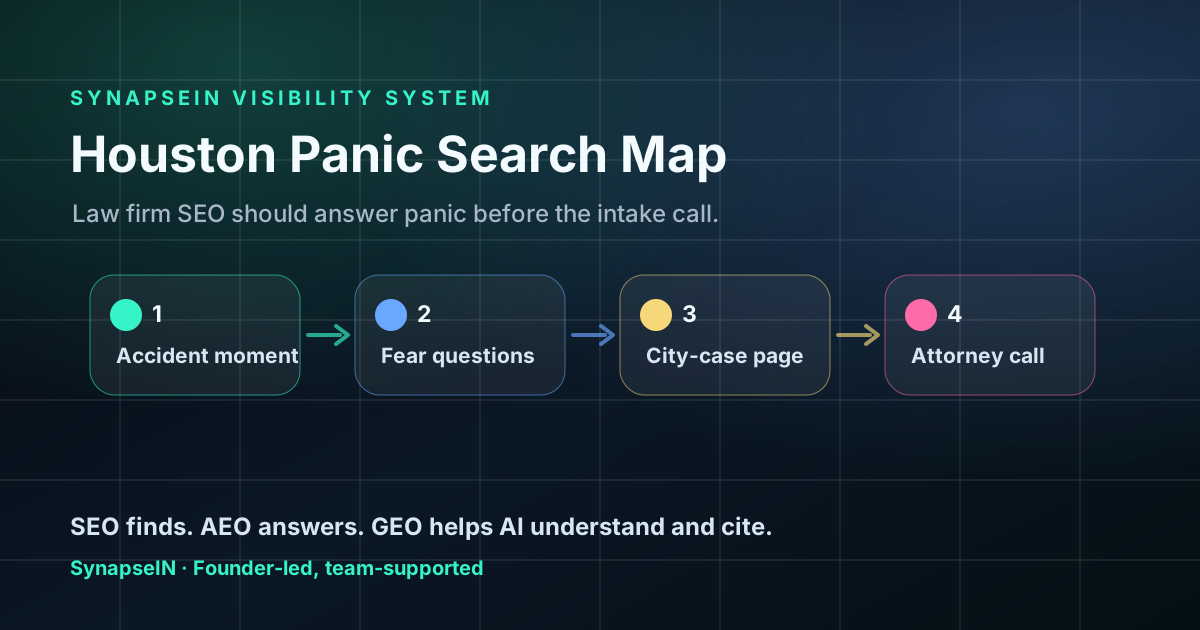
The searches that reveal the moment
These are distress signals
A man injured at a chemical plant does not want “aggressive advocates for justice.” He wants to know whether he can lose his job, who pays medical bills, what happens if the company blames him, and whether it is workers’ comp or a third-party claim.
The firm that answers first earns trust first.
Pre-call visibility systems
Your best client often decides before intake hears the phone ring. That is why SynapseIN maps panic searches, city-case intent and AI citation gaps for law firms.
- Panic search mapping for the worst moments in a buyer’s life.
- City-case intent mapping across Houston, Pasadena, Baytown, Galveston and nearby markets.
- AI Citation Forensics to see why one firm is mentioned and another is ignored.
Better answers, better cases
A weak page says “experienced industrial accident lawyers in Houston.” A powerful page explains what to do after a refinery explosion in Pasadena: medical records, employer pressure, OSHA investigations, third-party claims and when to contact an attorney.
What I would fix first
I would map the urgent searches by city, accident type and fear. A refinery injury page should answer different questions from a truck accident page or Jones Act page. The firm should explain what happens next, what evidence matters, who may be responsible and when to speak with an attorney, without turning the page into legal advice.
The work should feel practical, not theoretical. I would look for the pages where a serious buyer is already close to action, then ask four questions: does the page answer the fear, does it show proof, can Google understand the structure, and can an AI system safely summarize the brand without inventing anything?
- Strengthen the direct answer near the top of the page.
- Add schema, FAQs and internal links where they help the reader.
- Build location or niche pages only when they are genuinely useful.
- Remove vague claims and replace them with process, proof and next-step clarity.
That is the difference between content that exists and content that earns trust. One fills a website. The other helps a real person make a better decision.
This is where empathy becomes strategy. The page that calmly explains the first 24 hours after an accident often does more for trust than a page shouting about verdicts. People under pressure remember the business that made the next step feel understandable.
Questions this raises
What is panic search mapping?
It is mapping the urgent, fear-driven queries people type before contacting a lawyer.
Why is this better than generic law firm SEO?
Because it matches the real emotional and legal context behind the search, not just a broad keyword.
Can SynapseIN give legal advice?
No. SynapseIN improves search and content architecture. Legal advice must come from qualified attorneys.
Want me to look at your website with this lens?
Send the site through the free audit first. If the business is serious and the opportunity is real, Manas can review what is helping, what is missing and what should be fixed first.
Related SynapseIN resources
Adapted from a founder note by Manas Panda on LinkedIn and expanded for SynapseIN readers.