“Madness is rare in individuals — but it is the rule in crowds.” That's exactly what's killing most SEO strategies.
I read that last week. Late night. Novel in one hand, coffee going cold. Everyone follows the same blog, the same keyword tool, the same generic plan. The crowd runs one playbook and gets one result — average.

What the richest businesses understand
They don't compete with the crowd. They go precise.
EMAAR doesn't rank for "buy apartment Dubai." They show up for "off-plan 3BR penthouse Dubai Hills Grove with sea view for GCC investors."
Apollo Hospitals doesn't chase "best hospital India." They appear for "cardiac bypass surgery cost in Chennai NABH accredited."
Harley Medical Group London doesn't target "plastic surgery." They rank for "non-surgical rhinoplasty near Harley Street."
Clifford Chance doesn't optimize for "hire a lawyer." They show up for "cross-border M&A counsel for fintech startups London."
Sobha Realty doesn't chase "Dubai property." They own "luxury off-plan villa Mohammed Bin Rashid City with private garden."
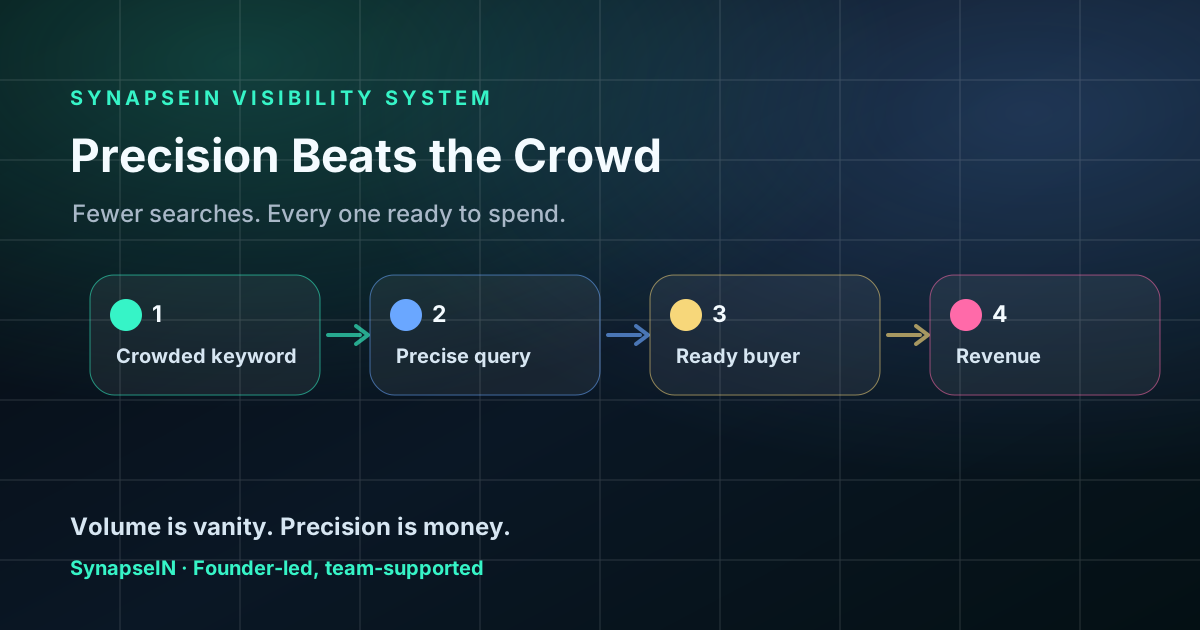
One is madness — broad, crowded, expensive. The other is precision — fewer searches, every one ready to spend.
That's the difference between SEO for traffic and SEO for revenue.
Three things most agencies skip
1. GEO-focused local SEO
Search tied to your city. Google Business Profile optimized. Google Maps locked. Location pages answering "best dermatologist near me in Koramangala" or "top-rated cosmetic dentist Mayfair London."
Your competitor shows up instead of you? That's not a ranking problem. That's a revenue leak.
2. Niche keywords — not generic
"Best digital marketing agency" — 100K searches. Everyone targets it.
"SEO for dental clinics in Birmingham UK" — maybe 200. But those 200 are clinic owners ready to pay.
Volume is vanity. Precision is money.
3. Content that answers — not just ranks
Google's AI picks the page that answers what someone typed. That's AEO.
A patient searches "Invisalign cost in Dubai Marina" — Google pulls the best answer. Not your clinic? The patient found your competitor.
"Off-plan property ROI Dubai 2026" — your site not structured for that? Invisible.
Why the crowd keeps losing
Because the crowd optimizes for what a keyword tool says is big, not for what a buyer with a budget actually types. A search with two hundred monthly queries and buying intent is worth more than a hundred thousand queries of curiosity.
The math is simple. Broad terms bring visitors who are browsing. Long-tail keywords bring people who have already decided what they want — they are choosing who to trust with it. Rank for the second kind and the enquiry arrives half-convinced.
I don't do crowd marketing. I build SEO and digital marketing systems for luxury real estate, healthcare, legal, financial services and premium hospitality. Real businesses. Real locations. Real clients through your door.
The crowd keeps copying. Getting average.
If you're building something that should stand out — your SEO should too.
Questions this raises
What are long-tail keywords and why do they convert better?
Long-tail keywords are specific, lower-volume searches like cardiac bypass surgery cost in Chennai NABH accredited. They convert better because the searcher has already defined exactly what they want — the search itself carries budget and intent.
Should businesses ignore high-volume keywords completely?
No, but high-volume keywords should not lead the strategy. Precision terms win revenue first; broad visibility grows later as the site earns topical authority in its niche and city.
What is the difference between SEO for traffic and SEO for revenue?
SEO for traffic chases search volume and vanity metrics. SEO for revenue targets the exact searches made by buyers ready to act — fewer visitors, higher intent, measurable enquiries.
Want me to look at your website with this lens?
Send the site through the free audit first. If the business is serious and the opportunity is real, Manas can review what is helping, what is missing and what should be fixed first.