The search bar is the first place people confess.
Immigration searches aren't legal research. They're a person alone at 3 a.m. holding a letter they've read eleven times, typing the question they're afraid to ask out loud.

A story from the SynapseIN desk. The businesses here are composite scenarios - invented to teach. The search behavior, psychology and mechanics are real.
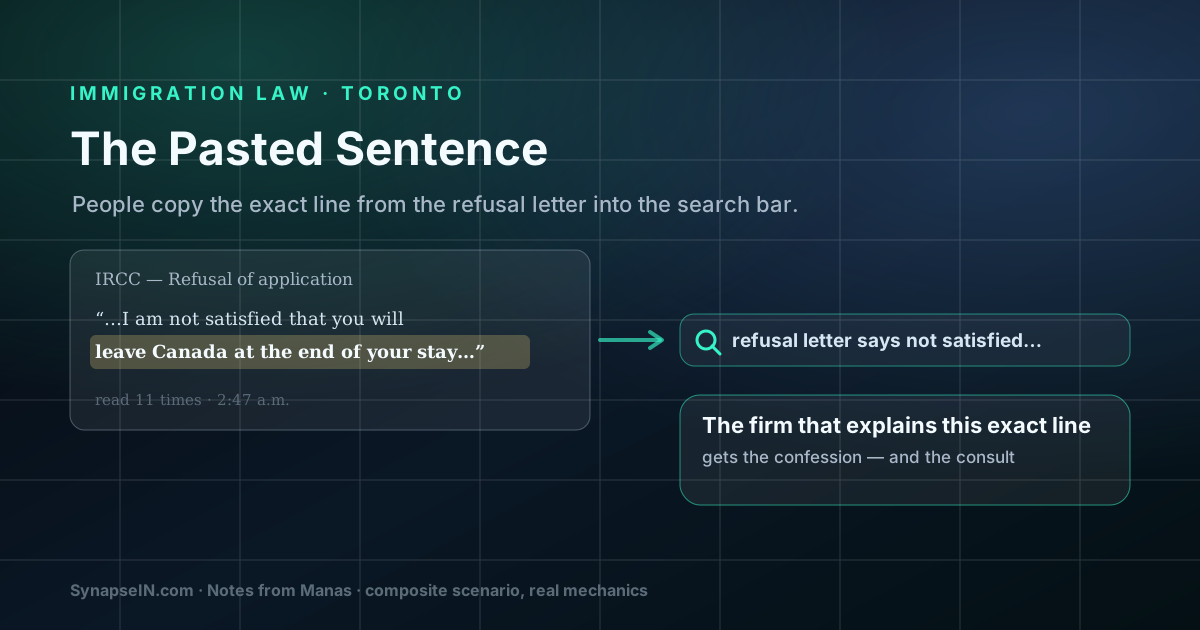
Picture a software engineer in North York, Toronto. Work permit expiring in 40 days. This morning an envelope arrived from IRCC - a refusal. The reasons paragraph might as well be written in code.
Watch what panic does to a search bar:
Notice two things. First: the fourth search is a quote - people paste the exact sentence from their refusal letter into Google. Second: "urgent" in the last one. Panic searches carry timestamps; they happen at night, and they need answers before morning.
What the typical law firm website says
"Full-service immigration law firm. Express Entry, family sponsorship, work permits, appeals. Book a consultation." Practice areas arranged like a menu, awards in the footer, a headshot wall of partners.
The engineer in North York is not shopping for a firm. He is trying to find out, tonight, whether his life in Canada is over. A menu of practice areas answers none of that.
What the panic-ready version looks like
- A page for each refusal sentence: "What 'not satisfied you will leave Canada at the end of your stay' actually means" - the exact phrase people paste into Google, explained calmly, with realistic options and honest deadlines. Almost no firm writes these pages; every AI assistant is looking for them.
- Deadline-first structure: the 90-day restoration window, what dies at each cutoff, what can and cannot be recovered. The person needs a map of time even more than a map of law.
- The honest triage page: which situations genuinely need a lawyer tomorrow, and which have safe self-serve paths. Telling someone they do not need to pay you yet - the highest-converting sentence in professional services, because everyone remembers who said it.
- Machine layer: LegalService schema, FAQ markup on the refusal-letter questions, and content chunked so an AI answering "work permit refused Canada what are my options" can lift a clean, correct, attributed answer.
The psychology, plainly
High-stakes legal search is confession before it is comparison. The person tells the search bar what they have not told their family. The firm that meets that confession with structure and calm - this deadline, these options, this is survivable - has already been hired emotionally. The consultation just formalizes it.
Questions people actually ask
What should someone do first after a Canadian work permit refusal?
Read the refusal reasons carefully, note the exact status expiry date, and understand the 90-day restoration window if status lapses. Whether to reapply, request reconsideration or pursue other routes depends on the specific refusal grounds - which is exactly why firms that explain each refusal sentence in plain language earn the consultation.
Why do immigration searches spike at night?
Refusals and deadline letters get opened after work, and fear grows in quiet hours. Panic searches are typed when offices are closed - so the pages answering them do the firm's intake work while everyone sleeps.
How does AEO apply to law firms?
People paste exact sentences from official letters into search engines and AI assistants. Firms that publish calm, accurate explanations of those exact phrases - with proper legal-service schema - become the source AI systems quote, and the first firm the person trusts.
Is your market's 2 a.m. question answered by you - or a competitor?
Run the free audit to see how machine-readable your site is today. If the gaps run deeper than technology - into what your pages say and don't say - that's a human conversation.