Why buyers trust plain sentences, and why your website still fails
Two verified studies, one from 1999 and one from 2002, explain most of what goes wrong between a good business and the person trying to buy from it. Neither of them is about marketing. Both of them are about how a mind decides that something feels true.
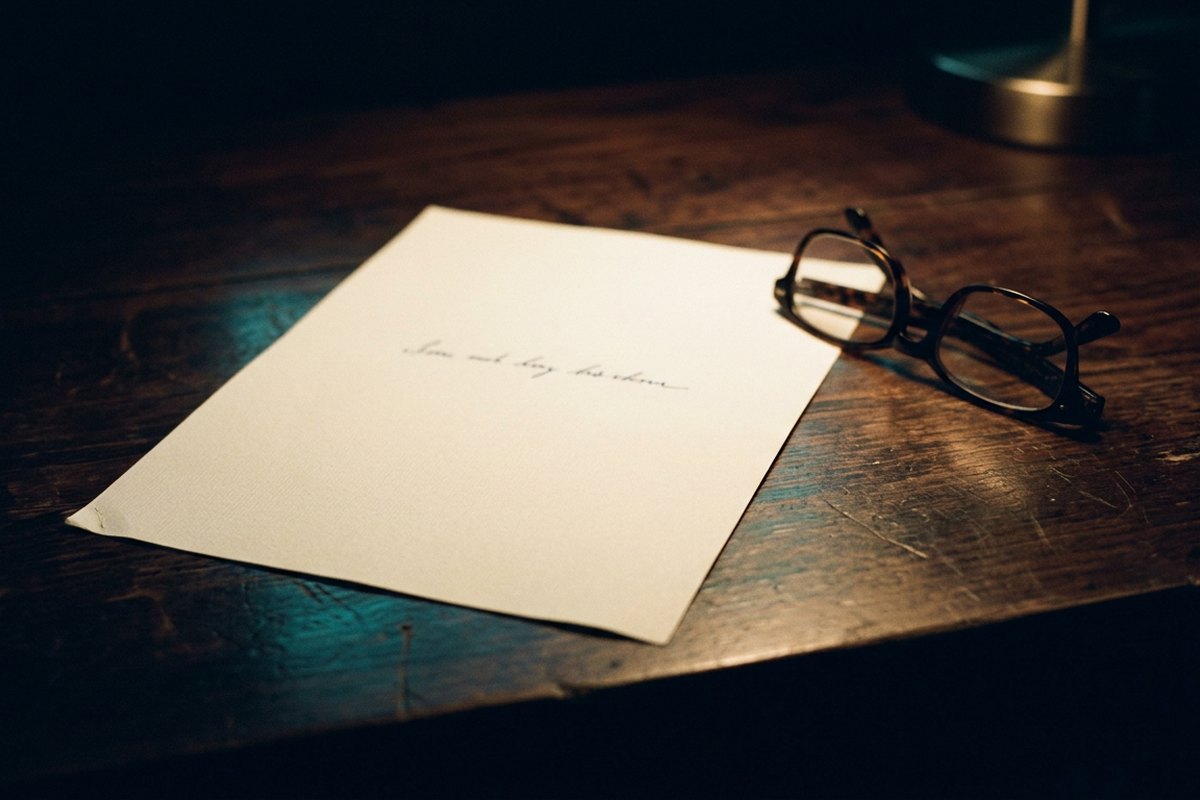
This page started as a question I kept getting in the same form. A business owner tells me his website is clear. He is not lying and he is not stupid. His website is clear to the only person who has never had to read it cold.
Two studies explain that better than I can.
Study one: easy to read feels true
In 1999, Rolf Reber and Norbert Schwarz showed people short factual statements, the kind you either believe or do not, such as a statement about which country a town is in. The statements were printed in colours that made them easy to read against the background, or colours that made them harder.
The results were uncomfortable. Statements in the easy colours were judged true significantly more often than chance. Statements in the harder colours were judged around chance, meaning people were mostly guessing. Nothing changed except how smoothly the eye went across the sentence.
They called it processing fluency. The part that matters for anyone selling something is the order of events inside a buyer's head. You do not weigh a claim carefully and then decide it feels right. The feeling arrives first, quietly, and then the reasons get assembled behind it.
This is why I flinch when a business owner says a page needs to sound more premium before it can sound clear. Premium is a feeling you are trying to install. Clear is the only thing that installs itself. If a buyer has to work to understand the first two sentences, some part of him has already decided the claim is not quite true, and he will not tell you that, because he does not know it happened.
What this means for the machines reading you
I want to be careful here, because this is where people in my trade start making things up. An assistant answering a question about your business has no nervous system and no feeling of ease. There is no fluency effect happening inside it.
What is true is narrower and just as useful. When a system needs to answer a buyer, it lifts a sentence out of a page and attributes it. Lifting is easier when the sentence stands on its own: a plain claim, with a number attached, with a date, close to the surface of the page rather than buried in paragraph four of a brochure. A sentence that a person finds trustworthy and a sentence that a machine finds quotable are usually the same sentence, because both rewards go to whatever is clean.
That is the whole of the AI visibility advice I would defend in public. Not tricks. Just making the true thing sayable in one line, and then saying it on the page instead of inside a downloaded file. If you want the mechanics, they are on what GEO actually means, and the checks are free on our tools page.
Study two: the illusion of explanatory depth
In 2002, Leonid Rozenblit and Frank Keil at Yale published twelve studies on a simple question. How well do people know what they think they know.
They asked people to rate how well they understood ordinary things. A bicycle, a flush toilet, a zip. Ratings were high. Then they asked them to explain, out loud and in detail, how the thing actually worked. After the attempt, they asked for the rating again. It dropped, every time, and it dropped hard. The participants were not lying the first time. They genuinely felt they understood, until the act of explaining showed them the holes.
Two details make this the most useful study I know for our work. The illusion was strongest for explanations, and much weaker for facts, procedures and stories. And it was strongest for things with visible parts that seem obvious while you are looking at them.
Now put an owner in front of that. He can explain his business beautifully, out loud, to a customer standing in front of him. His hands move, he answers the next question, he adjusts. That fluency is real, and it convinces him his website explains the business too. The customer never gets the hands, the tone, or the follow-up question. He gets the page, alone, at 11pm.
This is not a writing problem. It is a gap between what is in the owner's head and what reached the words, and nobody has ever shown it to him from the outside. It is also why so many pages open with who we are and how long we have been doing this. Those are the sentences a person writes when he is standing next to himself while writing.
The plain sentence test
Take the claim you are proudest of. The one you would say across a table if you had one minute and the buyer already trusted you. Now try to write it as one sentence with a number in it and a date attached.
The shape we use is this. The result as a number. The population or situation it came from. The date. Where it can be checked. Here is ours, and we use our own figures so you can open the file and count: 2,514 visits from GPTBot against 803 from the two surfaces that can actually send us readers, OpenAI's search crawler and ChatGPT's user crawler, in September 2026, from the census we publish every month. Weight, not decoration. A buyer can hold that, and an assistant can repeat it, and anyone who doubts it can download the CSV.
The census behind that number, including the bots we had to disqualify as our own traffic, is at Who Knocked, September 2026, and the raw logs are on the CSV. If our own number is wrong, it is wrong in public where you can see it.
If the sentence cannot be built, that is the useful finding. It means the claim is still a feeling you have about yourself, and feelings do not survive the trip to a stranger. Either find the number, or say something smaller that is true.
We do not invent numbers to pass this test. Every figure on our own site carries its evidence on the claims ledger, and when we get one wrong the glass page says so in public with the date.
What to do this week
Read your own homepage out loud, standing up, to somebody who does not work with you. Not to check the grammar. To find the first sentence where they stop following you, because that is the sentence costing you enquiries.
Then take the three claims you repeat most often, and write each one as a plain sentence with a number and a date. Publish them as text on a page, not only inside a PDF. Give the page a date and an author so anyone can attribute it.
Then ask an assistant a question your best customer would ask, and see whether your business is named. If it is not, you have found the gap without paying anybody. If you want the whole set of checks done properly, the free audit exists for that, and our prices are public on the pricing page before you speak to us.
If you read the Godfather piece about hiring an agency, the six rules are here. The two pages are meant to be read together. One is about who to trust, this one is about what actually works.
Questions people actually ask
Why do people trust simple writing more than complicated writing?
Because ease of reading is used as a clue about truth. In a 1999 experiment by Rolf Reber and Norbert Schwarz, short factual statements printed in colours that were easy to read were judged true significantly more often than chance, while statements that were harder to read were mostly guessed. The content did not change, only the smoothness of reading it. Psychologists call this processing fluency.
Do AI assistants prefer simple sentences too?
An assistant does not feel anything, so this is not the same mechanism. What happens is narrower and just as useful. When a system has to lift a sentence out of a page to answer a buyer, it takes one that is clean to read and easy to attribute: a plain claim, with a number and a date attached. The same sentence that a person finds easy to trust is usually the one a machine finds easy to quote.
What is the illusion of explanatory depth?
It is the documented tendency to believe we understand how something works in more detail than we actually do. Leonid Rozenblit and Frank Keil demonstrated it across twelve studies in Cognitive Science in 2002. People rated their own understanding of everyday mechanisms highly, then tried to explain the mechanism out loud, and their confidence dropped. It is strongest for explanations, weaker for facts and for stories.
Why does the owner think his website is clear when customers do not?
Because the owner has never read his own website alone. He reads it with himself in the room: the tone of voice, the workshop, the phone call, the story of why he started. A customer gets the page with none of that attached. The gap between the owner's mental version and the page's actual words is where most lost enquiries live.
How do I write a claim that buyers and AI systems can both use?
Put four things in one plain sentence: the result as a number, the population or situation it came from, the date, and where it can be checked. Our own example: 2,514 visits from GPTBot against 803 from the two surfaces that can actually send readers, OpenAI search and ChatGPT user, in September 2026, from our published log census. If the sentence cannot be built, the claim is not ready yet.
Does writing plainly hurt a premium brand?
No. Plain is not thin. Clothing, watches and private aviation all sell with short sentences, because confidence does not need decoration. What plain writing removes is fog, and fog is where buyers go to find a reason to leave.
Sources
Reber, R., and Schwarz, N. (1999). Effects of perceptual fluency on judgments of truth. Consciousness and Cognition, 8(3), 338 to 342. doi:10.1006/ccog.1999.0386
Rozenblit, L., and Keil, F. (2002). The misunderstood limits of folk science: an illusion of explanatory depth. Cognitive Science, 26(5), 521 to 562. doi:10.1016/S0364-0213(02)00078-2
This is the first entry in a series we call The Buyer's Brain, where we take one real study a month and apply it honestly to being found and chosen. No invented statistics, no borrowed authority. If a study does not hold up, we say that too. Corrections live on the glass page.
From clarity to search visibility
If you want help making a business easier to find and understand, see our SEO, AEO and GEO services.