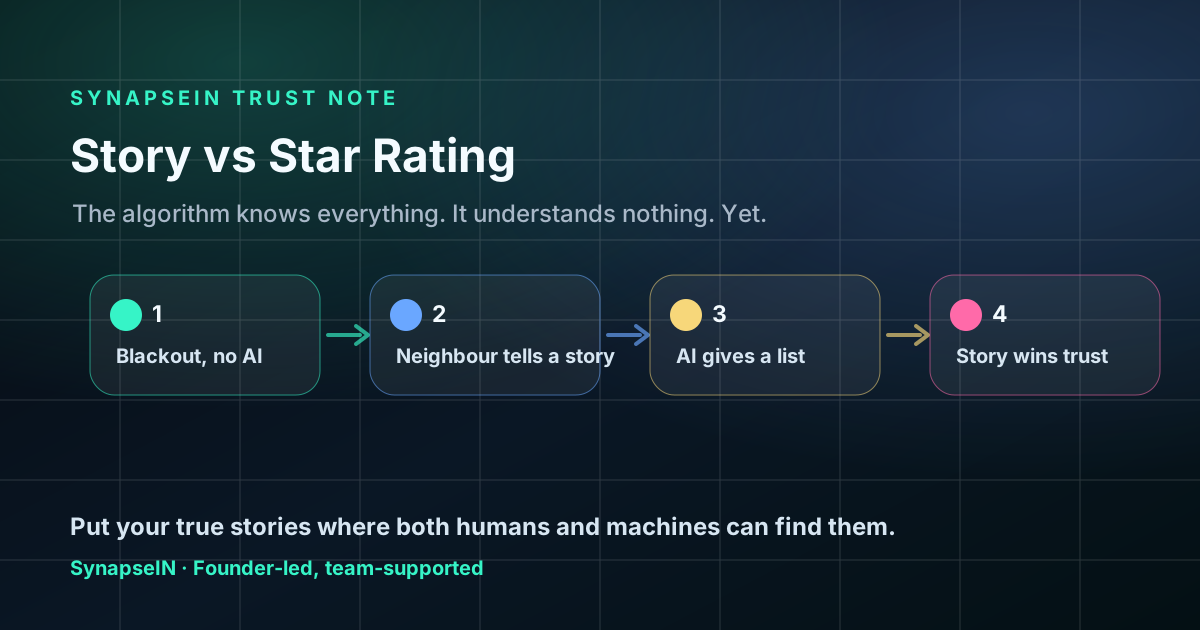
My electricity went out during a thunderstorm. Sitting in the dark, I realized something about the machines.
Phone dead. Laptop dead. For the first time in years I couldn't ask a machine for anything. So I did something my generation has almost forgotten how to do — I knocked on my neighbour's door.
What my neighbour gave me that no app could
He didn't just give me an electrician's name. He told me a story.
About how this electrician saved his wedding reception when the venue lost power. Showed up at midnight in the pouring rain. Refused extra payment because "nobody should start their marriage in the dark." Still sends the couple a card every year.
I called that electrician. He came at 1 AM in the storm and fixed everything. Wouldn't take extra either.
The next morning's experiment
With power restored, I asked an AI assistant the same question: "best emergency electrician near me."
It gave me a list. Good ratings. Professional websites. Response times.
But no soul. No story. No reason to choose one over another — except numbers that all looked the same.
That's when it hit me like lightning: we've built machines that give perfect answers but can't give us reasons to trust those answers.
What the algorithm misses
When AI recommends a restaurant, it knows the ratings — not that the chef's grandmother taught him every recipe by hand. When it suggests a consultant, it knows the credentials — not that she once worked weekends free because she believed in a failing founder. When it lists contractors, it knows the reviews — not that one has fixed the same family's homes for three generations.
The algorithm knows everything. It understands nothing.
Here's where I differ from the nostalgia crowd
Most people telling this story conclude "so forget the machines, be human." Sweet, and commercially useless — because your next customer IS asking the machine first.
The real conclusion: your stories are ranking assets, and almost nobody treats them that way.
- That midnight rescue? It belongs on your website as a written story — not locked in a neighbour's memory.
- The refused payment, the three generations, the Christmas cards? Those are trust signals. Google's quality raters literally look for evidence of experience and trustworthiness.
- Reviews that tell stories beat reviews that give stars. Ask happy customers one question: "what happened?" — not "how many stars?"
- Structured properly — real names, real events, clean markup — stories become exactly the "proof cues" that make both humans and AI engines comfortable recommending you.
When everything sounds the same, the thing that's different is the thing that's real. And the businesses that put their real stories where machines can find them get the best of both worlds: the algorithm's reach and the neighbour's trust.
The question worth asking
What's the story a customer would tell about your business at a door, in the dark, during a storm?
Now — is that story anywhere on your website?
If not, that's not a marketing gap. That's your best asset, unpublished.
Questions this raises
Do customer stories actually help SEO?
Yes. Specific first-hand stories are evidence of experience and trust — factors Google's quality guidelines explicitly reward — and they produce the distinctive content AI engines prefer to quote over generic claims.
How should a business collect trust stories?
Ask happy customers “what happened?” instead of “how many stars?”. Save the answers, get permission, publish the best ones with real details on your website.
Can AI engines understand emotional content?
They can extract and summarize it — what they cannot do is invent it. A true, specific story on your site gives AI something no competitor can copy.
Want me to look at your website with this lens?
Send the site through the free audit first. If the business is serious and the opportunity is real, Manas can review what is helping, what is missing and what should be fixed first.