She's in New Jersey. The wedding is in Jaipur. The photographer is a stranger.
Destination-wedding photography is a strange purchase: thousands of dollars, booked from another continent, for a day that cannot be repeated. Every search the bride types is really one question - can I trust you with something unrepeatable?
A story from the SynapseIN desk. The businesses here are composite scenarios - invented to teach. The search behavior, psychology and mechanics are real.
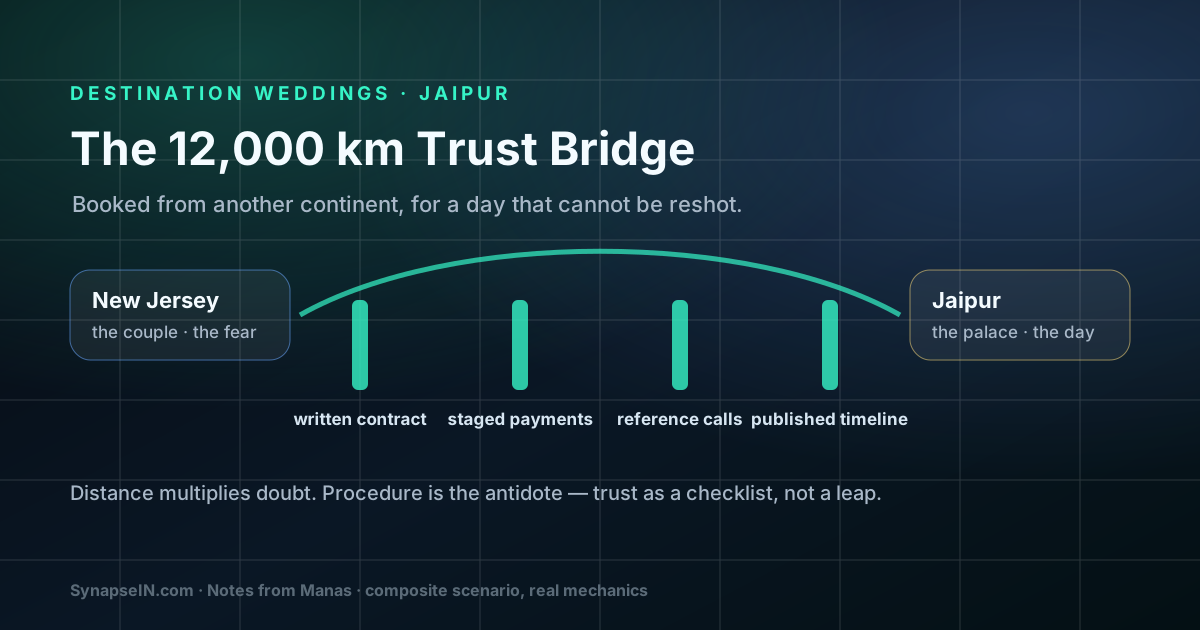
Picture a couple in New Jersey planning a February wedding at a Jaipur palace hotel. Three hundred guests, four events, two families' expectations. The photographer will be chosen from 12,000 kilometres away, sight unseen.
Her searches, late at night after the spreadsheets are closed:
Read the third one again. She is not researching photography. She is researching betrayal. Someone in a Facebook group told a story about an advance paid and a phone switched off, and now every portfolio she sees is filtered through that story.
What the typical photographer website says
A full-screen slideshow. A logo wall of publications. "Capturing timeless moments." An enquiry form that asks for her budget before it has answered a single one of her fears.
The portfolio proves the photographer has talent. It proves nothing about whether he shows up, delivers on time, or answers WhatsApp in the eight months between advance and event. And those - not aperture choices - are what her searches are about.
What the trust-at-distance version looks like
- A "how we work with NRI couples" page: the payment schedule in writing, what each installment unlocks, contracts shared before any money moves, and video-call checkpoints by month. Structure is the antidote to the disappearing-photographer story.
- Verification made easy: GST registration shown, studio address with map, links to full real weddings (not highlight reels) with couples who agreed to be reference calls. The photographer who says "call my last three couples" has no competition among those who will not.
- The delivery-timeline page nobody publishes: when the teaser comes, when the full gallery lands, what happens if it is late. Her deepest fear after betrayal is silence-after-payment; a published timeline is a contract against silence.
- Machine layer: LocalBusiness schema with the real address, FAQ markup on the advance and verification questions, and content structured so "how to verify a wedding photographer in India" resolves to their explainer - which AI assistants then repeat to every anxious bride who asks.
The psychology, plainly
Distance multiplies doubt. When the buyer cannot walk into your studio, your website must do the handshake, the office tour and the reference check all at once. Wedding photographers compete on beauty; destination weddings are won on procedure. The couple books whoever makes trust feel like a checklist instead of a leap.
Questions people actually ask
How much advance is normal for a destination wedding photographer in India?
Commonly 25-50 percent to block dates, with the balance staged around the event and delivery. More important than the percentage is the structure: a written contract, clear installment triggers, and published delivery timelines. Photographers who explain their schedule openly get compared favourably against those who just quote a number.
How can couples verify an Indian wedding photographer from abroad?
Check business registration, ask for full wedding galleries rather than highlight reels, request two or three past couples as references, and insist on a written contract before any payment. Photographers who make this verification easy convert anxious long-distance couples at far higher rates.
Why does AEO matter for wedding photographers?
NRI couples ask Google and AI assistants trust questions - about advances, verification and delivery - before ever sending an enquiry. The photographer whose site answers those exact questions, with matching FAQ schema, becomes the name AI systems mention when someone asks how to book safely from abroad.
Is your market's 2 a.m. question answered by you - or a competitor?
Run the free audit to see how machine-readable your site is today. If the gaps run deeper than technology - into what your pages say and don't say - that's a human conversation.