The Salon Website That Makes Booking Feel Like Homework
Review the path from a salon service page to a booking, including clear service names, pricing and mobile usability.
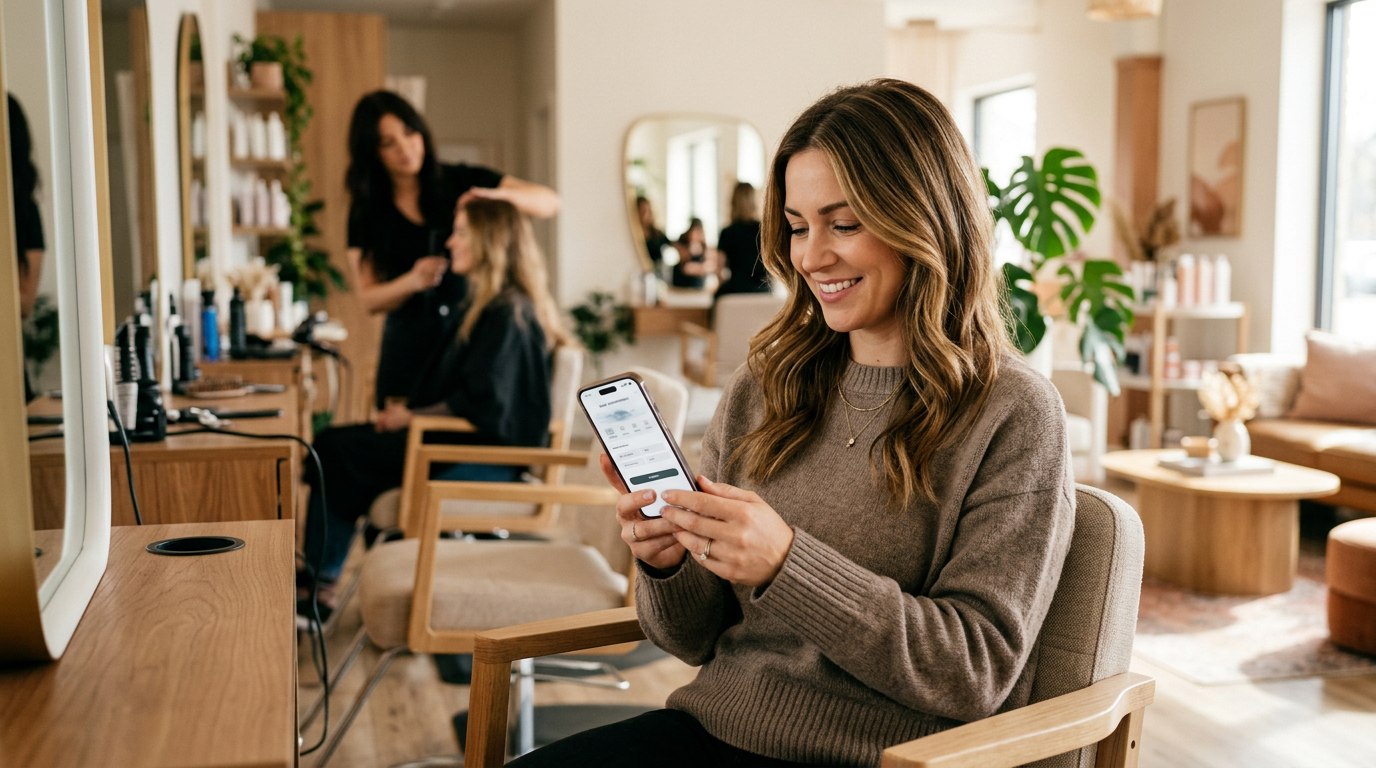
A potential client wants an appointment.
The website shows beautiful hair, a row of glowing reviews and a button that says “Book now.” The button opens a list of services with names the visitor does not recognise. There are several prices. None explains how long the appointment takes or which option to choose.
This is a hypothetical booking journey, not a claim about a real salon. The visitor might keep going. They might also put the phone down and promise themselves they will come back later.
The website owner will see neither the confusion nor the little negotiation happening on the screen.
What makes a salon website easier to book?
Clear service names, accurate prices or pricing explanations, a working booking route and a way to ask for help when a visitor is unsure can make the process easier to understand.
That does not mean every salon should publish the same menu, fixed prices or appointment times. The page should reflect the salon’s actual services and booking arrangements.
The visitor is choosing a service before choosing a time
A loyal client may know exactly what to book. A first-time visitor may know only the result they are looking for, or that they need to speak to someone before choosing.
If the salon uses specialist names for services, explain them in ordinary language where possible. A short description can answer:
- What is this service intended to cover?
- How does a new client choose between related options?
- Is a consultation needed, and how is it arranged?
- Is the displayed price fixed, a starting price or subject to assessment?
- Where can the client ask a question before booking?
The salon should decide what to publish. Don’t invent treatment descriptions, timing, prices or results to fill a page.
A price can be honest without being identical for everyone
Some services may have fixed prices. Others may depend on the work involved. Both can be explained clearly.
If a page says “from,” make the conditions easy to find. If the salon can only provide a quote after a consultation, say that instead of displaying a number that may not apply.
For search and AI-assisted discovery, accurate information is more useful than confident guesswork. The page’s job is not to promise the cheapest appointment. It is to help someone understand what they are considering.
Follow the booking button on a phone
Open the website on a phone and begin from a service page, not the home page. A search visitor may arrive there first.
Try the journey without making a real booking:
- Find the service description.
- Tap the booking option.
- Check whether the service name on the booking screen matches the page.
- Check whether the visitor can see the relevant price explanation and location.
- Find a contact route for someone who is unsure.
Record the device, browser and page URL. If a test requires submitting personal details or creating an appointment, agree it with the salon first. An internal or staging test is preferable to surprising the team with a fake booking.
A good mobile review is not simply “the website fits on the screen.” It asks whether a real task can be completed without unnecessary guessing.
Before redesigning, find the useful pages already there
A redesign may be worthwhile. It may also be more work than the immediate problem requires.
Sometimes the first improvement is a clearer service name, a better explanation beside the price or a button that leads to the right booking option. Start there before deciding that every page needs to be replaced.
If URLs will change during a redesign, plan the old and new addresses before launch. Google’s site-move guidance discusses URL mapping, appropriate redirects and monitoring after a move. A redirect plan does not guarantee unchanged rankings, but ignoring existing URLs can create avoidable confusion.
SynapseIN’s SEO-first website development work looks at the structure and customer journey alongside the design.
Make local information match reality
If a salon has a customer-facing location, its address, hours, contact information and services should be accurate on the website and, where the business is eligible, on its Google Business Profile.
Google’s Business Profile guidelines ask businesses to represent themselves accurately and use real customer-facing hours. A change in the salon’s hours should not wait for the next redesign.
Don’t create a location page or profile for an address where the business has no eligible presence. A larger list of locations is not a substitute for an accurate one.
Our local SEO and multi-location service considers those signals where they are relevant to the business.
What should an AI answer find?
A visitor may ask an assistant for a salon or a particular service. That makes it worth checking whether the salon’s public pages clearly explain the facts a person would need too: the real service, location, booking route and available price information.
A clear page does not guarantee an AI mention. For Google’s AI features, Google states that the normal Search foundations apply and that there are no additional AI-specific technical requirements. A page must be indexed and snippet-eligible to be eligible as a supporting link; appearing is not guaranteed.
If you test another assistant, use real questions and record the date, wording and response. A website scan does not directly measure a live recommendation.
Three things to review this week
Not three promises. Three checks:
- Ask the person who handles bookings which service descriptions most often need explaining.
- Follow one first-time booking journey on a phone without submitting a false appointment.
- Confirm the public hours, contact details and price wording with the salon owner.
You may find a redesign project. You may find a paragraph that needs rewriting. Both are useful discoveries when they are supported by what actually happened.
If you would like a second pair of eyes on the journey from service page to booking, contact SynapseIN. We’ll start with the page and the process, not a promise to make the calendar magically full.
Sources and scope
- Google: site moves and URL changes.
- Google: guidelines for representing a business.
- Google: AI features and your website.
- The opening scenario is hypothetical. Service descriptions, prices, business-profile eligibility and booking policies must be checked with the actual business.